

Once dismissed as the humble centrepiece of school canteens and office mornings, the slab cake has been quietly reimagined — emerging as one of the most beautiful, expressive, and practical formats in modern celebration baking.
21 April 2026
3 minute read
The Long Canvas - Sculptural Slab Cakes Are Back
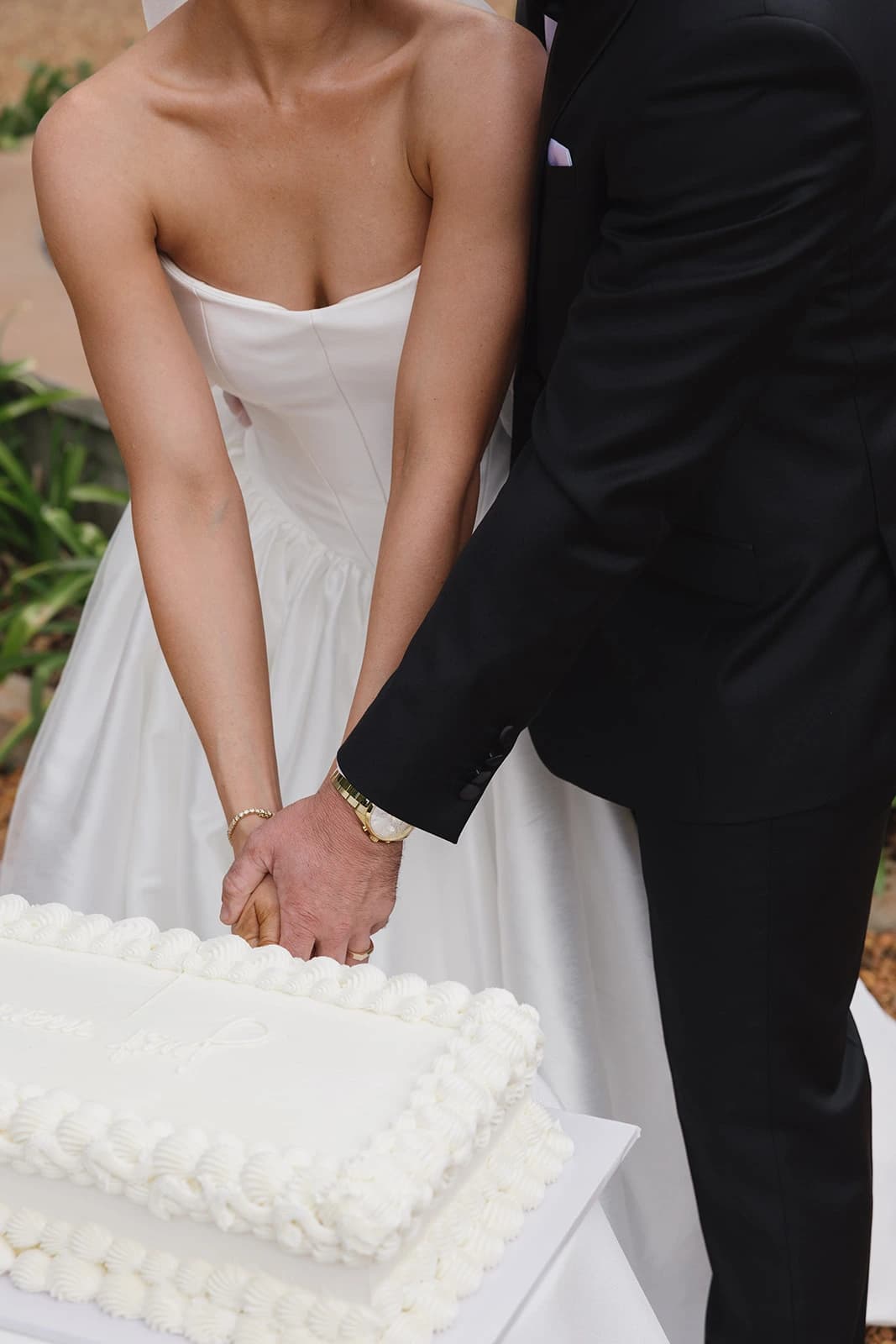
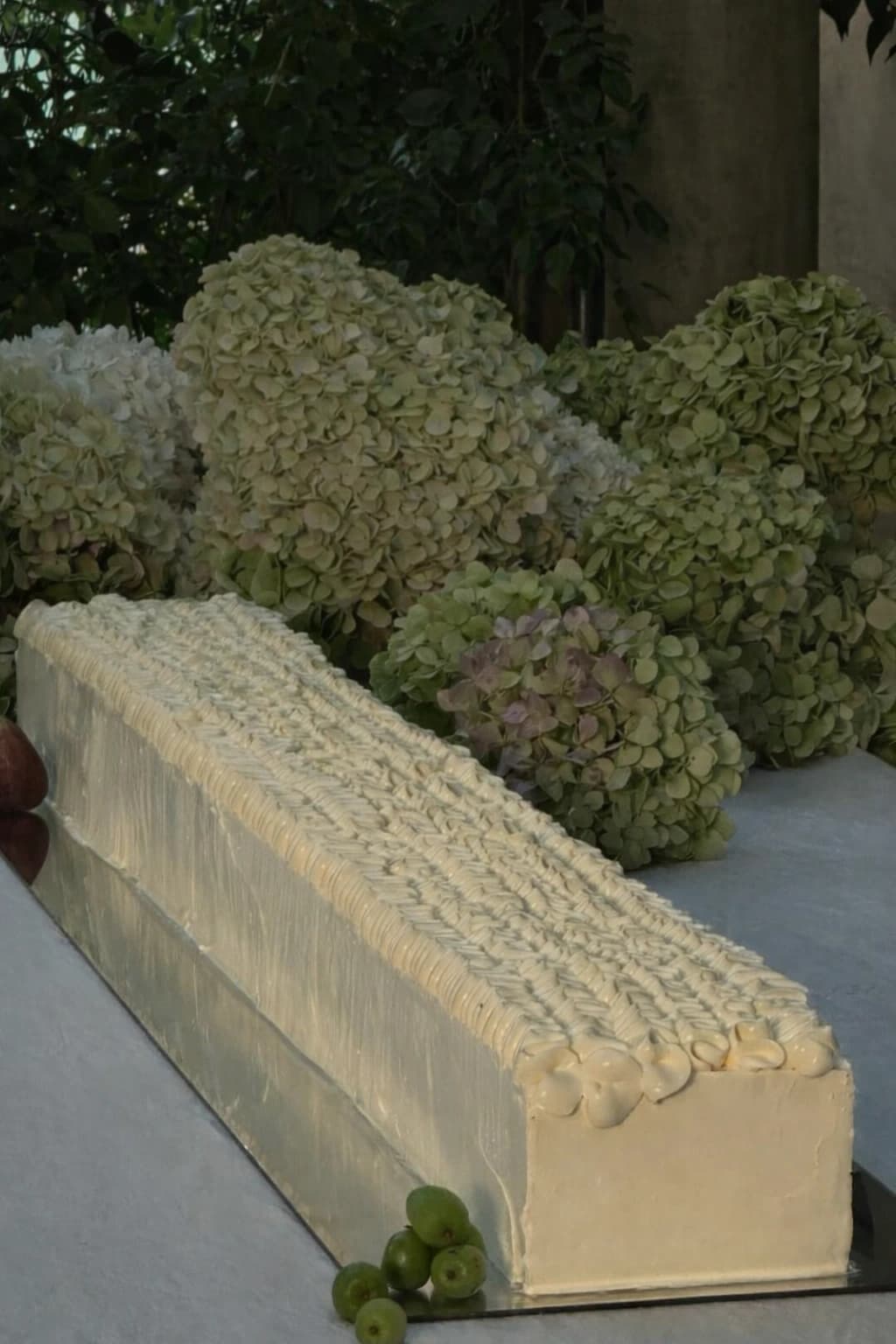
Sheet cakes have deep roots. They rose to prominence in mid-twentieth century America, when home economists and commercial bakeries championed large, flat formats for their ease of production and effortless portioning. Church suppers, potlucks, birthday parties for thirty — the slab cake was the workhorse of communal feeding, reliable and unfussy. For decades, it sat quietly in the shadow of the towering tiered wedding cake, admired for practicality but rarely for beauty.
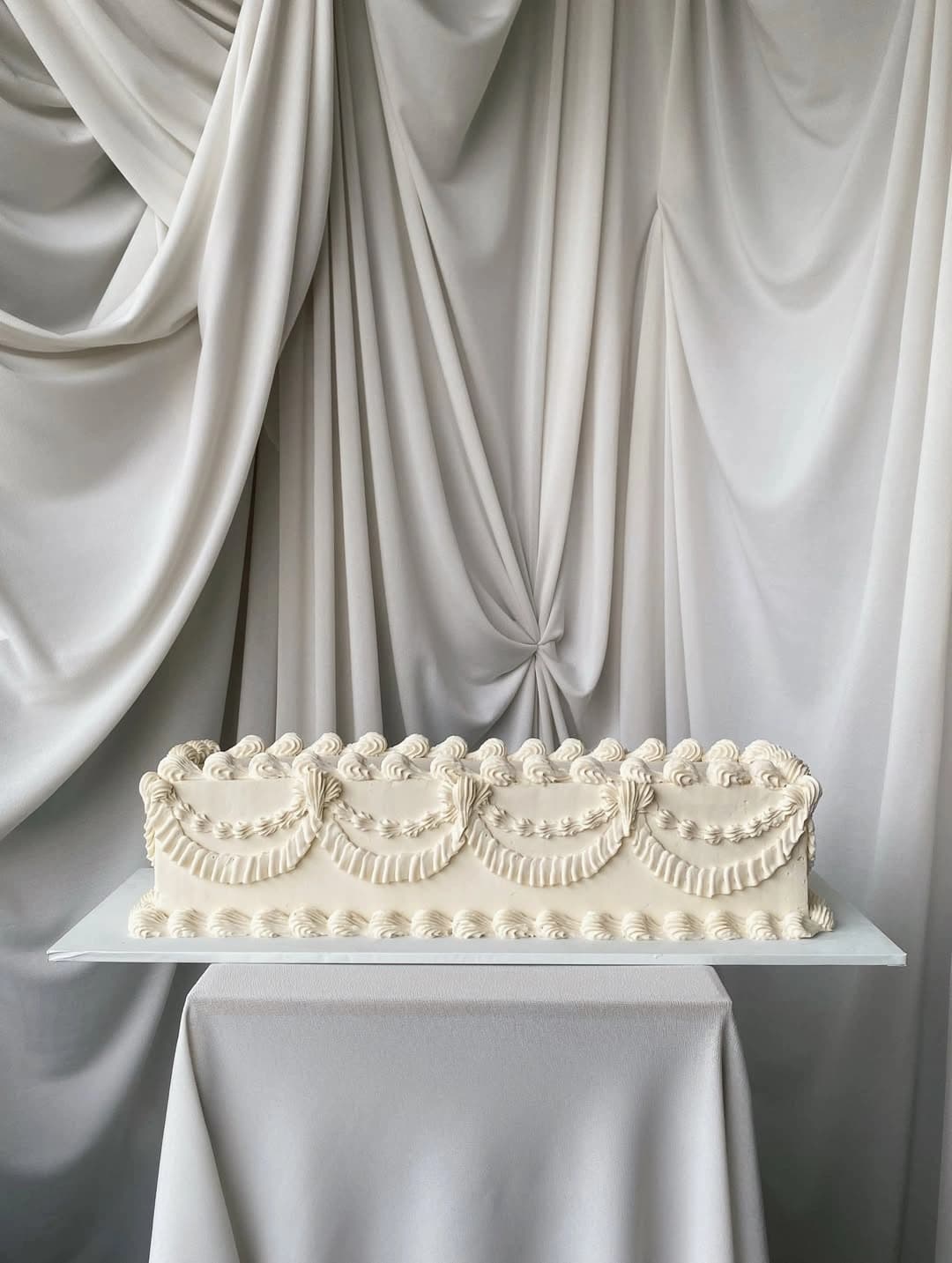
That is changing. A new generation of bakers has recognised something the old guard always knew but never fully exploited: the slab cake is an extraordinary canvas.
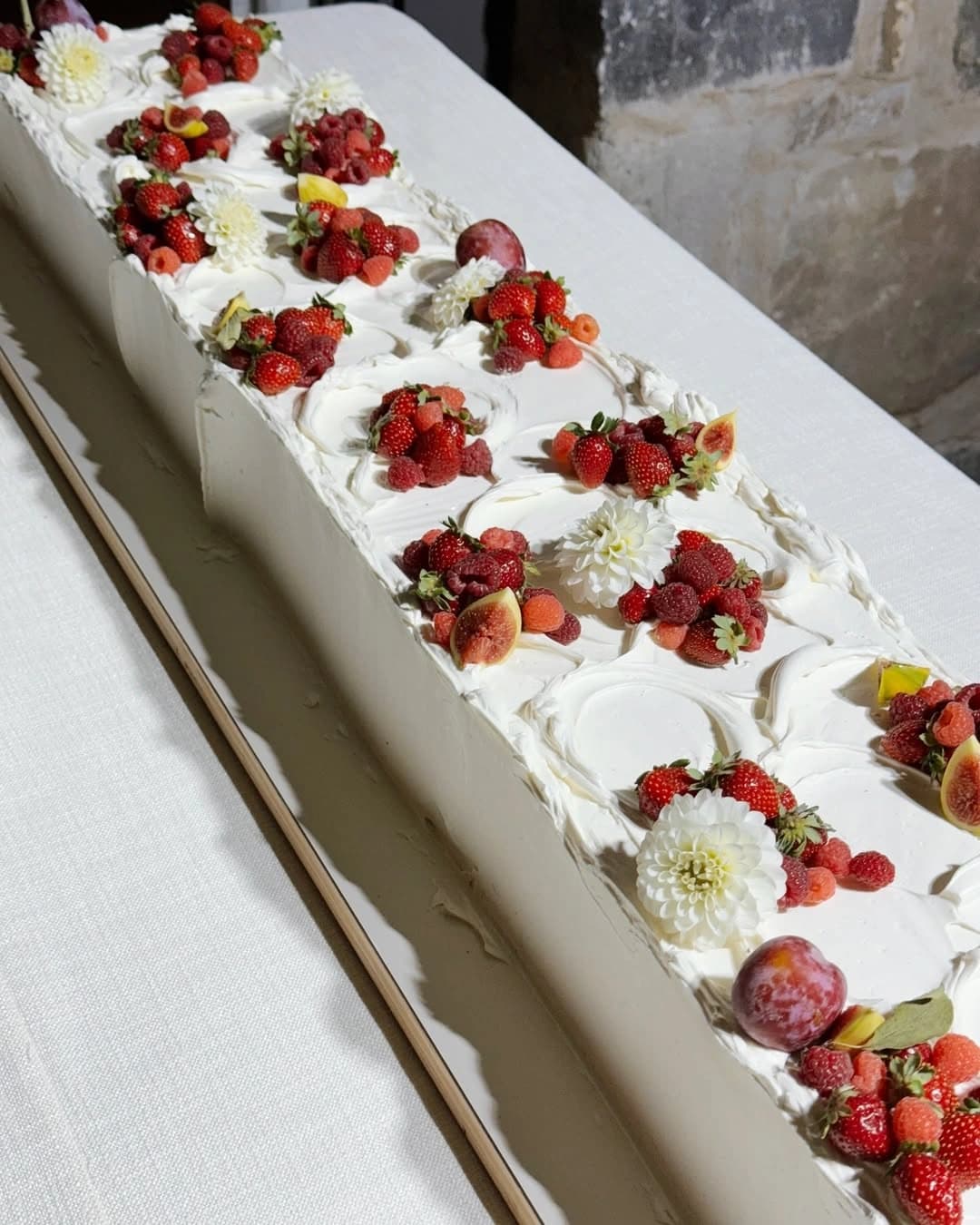
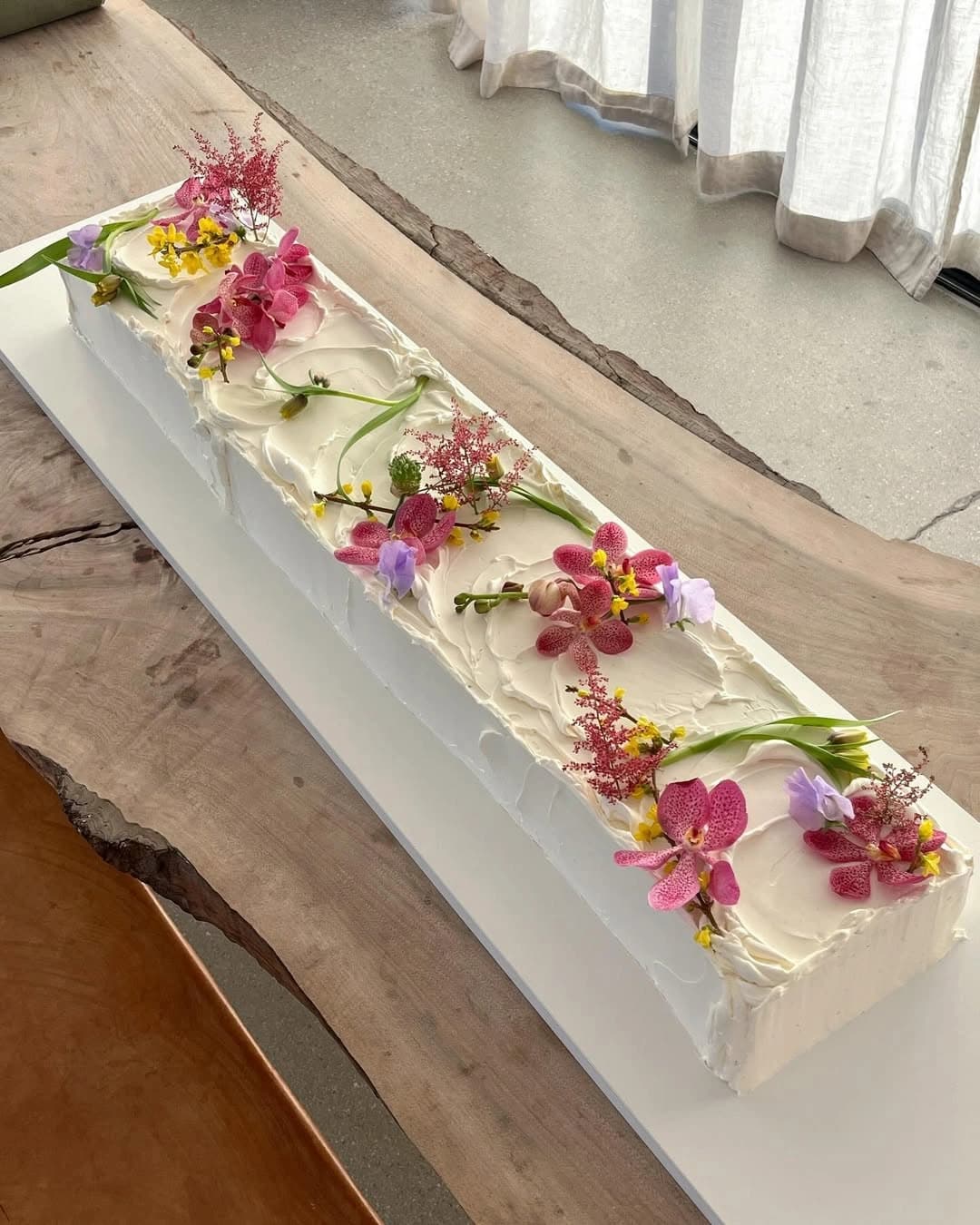
Where a round cake demands symmetry and a tiered cake commands verticality, the long horizontal form of a slab invites something more painterly. Baroque sugar work cascades across the surface in uninterrupted sweeps. Fresh blooms — ranunculus, hydrangea, spray roses — can be arranged in deliberate, asymmetric abundance, spilling from one end like a garden in mid-exhale. Freeze-dried raspberries and whole cherries scatter across snowy white frosting with the studied nonchalance of a still life. The format rewards ambition. It does not ask you to work in the round.
The sculptural possibilities are particularly striking. Applied sugar or marzipan detailing — the kind of elaborate bas-relief work seen on antique European confectionery — finds its ideal home on a flat rectangular surface. Acanthus scrolls, floral medallions, lace-like piping: these techniques read clearly and dramatically when laid along a long horizontal plane, rather than wrapping an awkward curve. Bakers working in this idiom have drawn comparison to decorative plasterwork, to Wedgwood, to the elaborate sugar table centrepieces of eighteenth-century aristocratic entertaining.
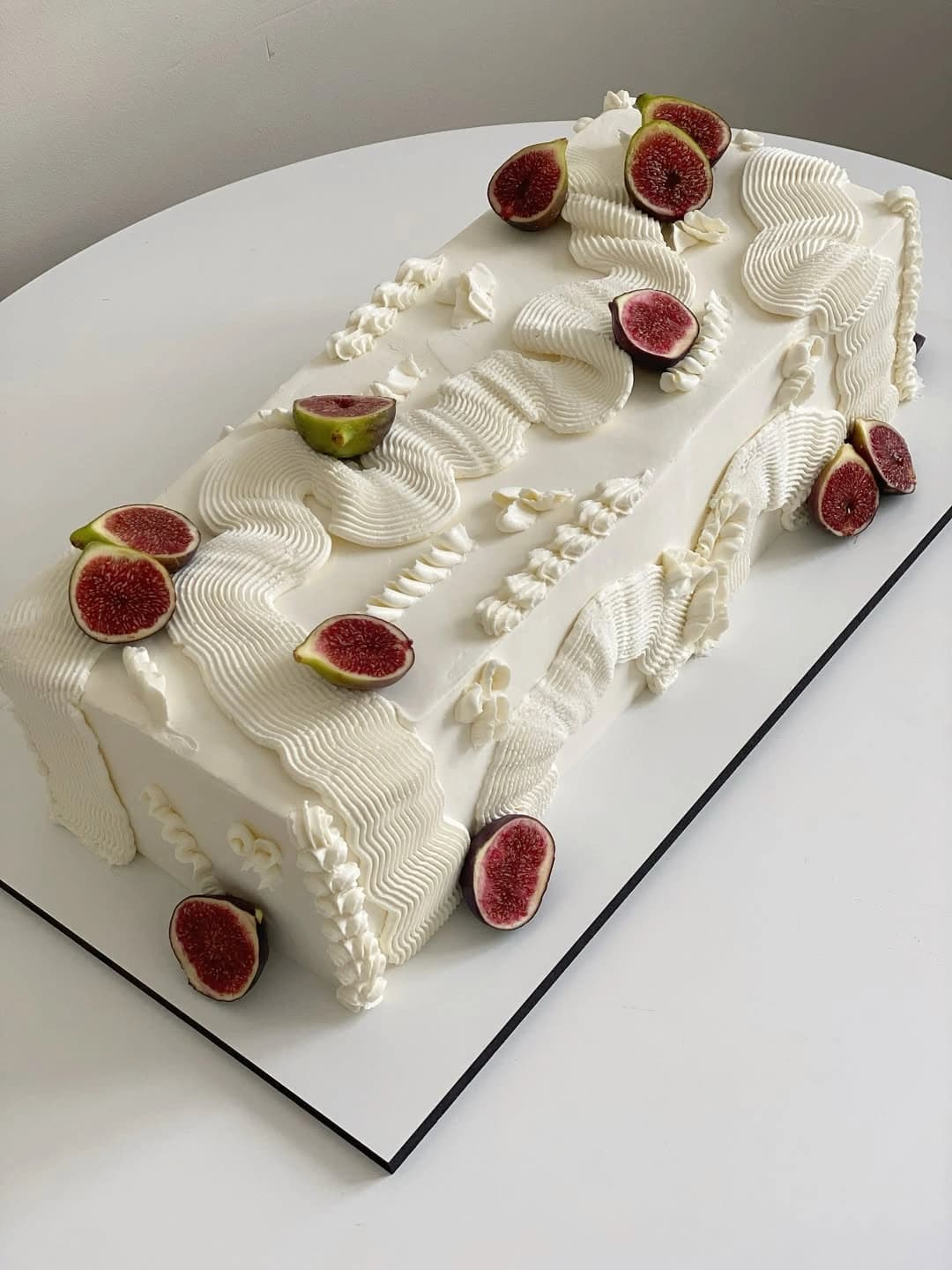
There are, of course, deeply practical reasons for this revival. A slab cake is significantly easier to transport than a tiered construction — no internal doweling, no anxiety about structural integrity on the drive. It is easier to store. And it is, frankly, a pleasure to cut and serve. Clean rectangular portions require no special skill, no awkward angling of a cake server, no anxious attempt to slice a perfect wedge. Guests receive neat, even slices without ceremony.
BAKERS NOTE
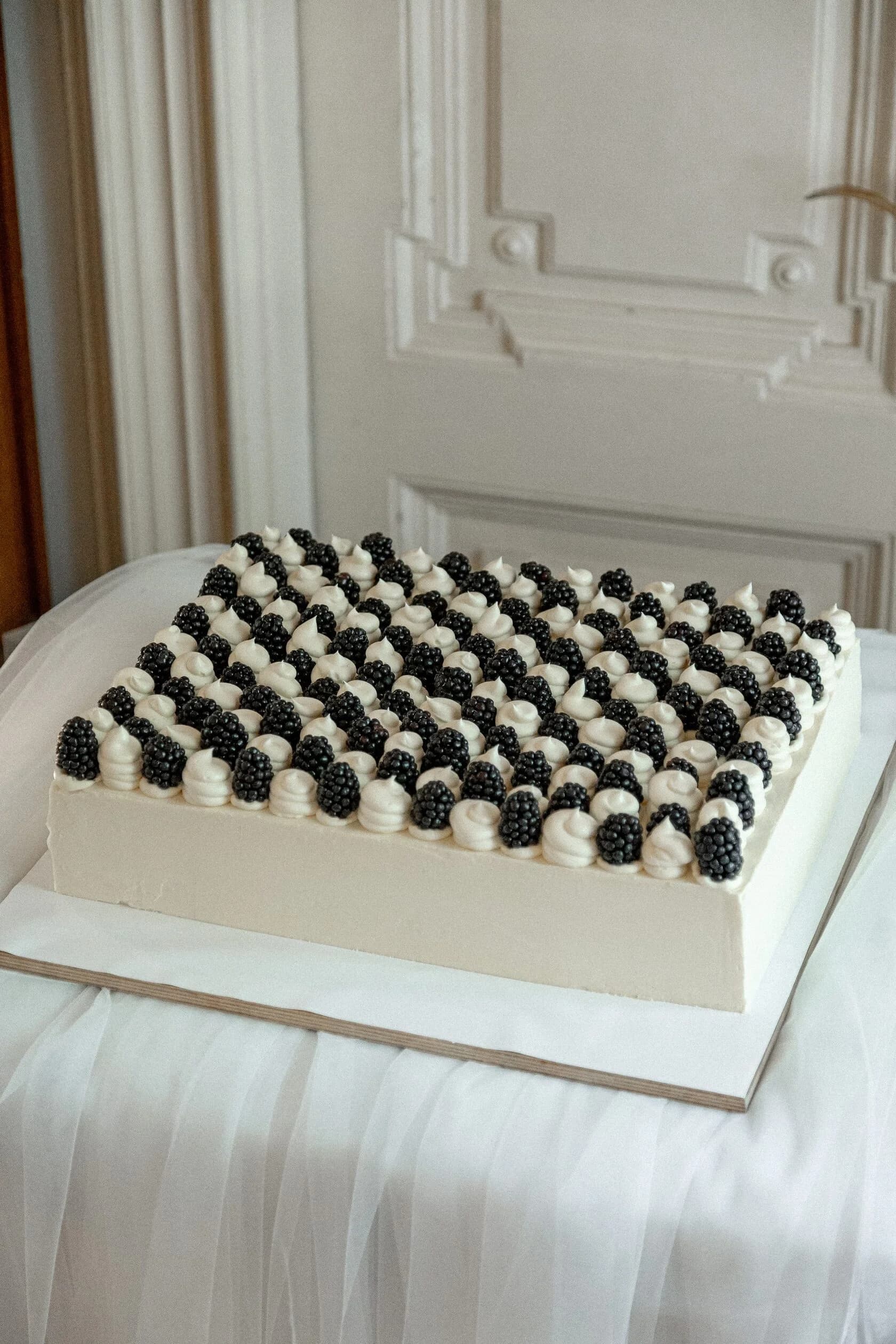
A standard 9 × 13 inch slab cake serves roughly 25–30 guests. For this size, a 10 × 14 inch presentation board provides the ideal clearance for handling and decoration. Scale up proportionally for larger gatherings — two boards arranged end-to-end create a striking runway effect for very long tables.
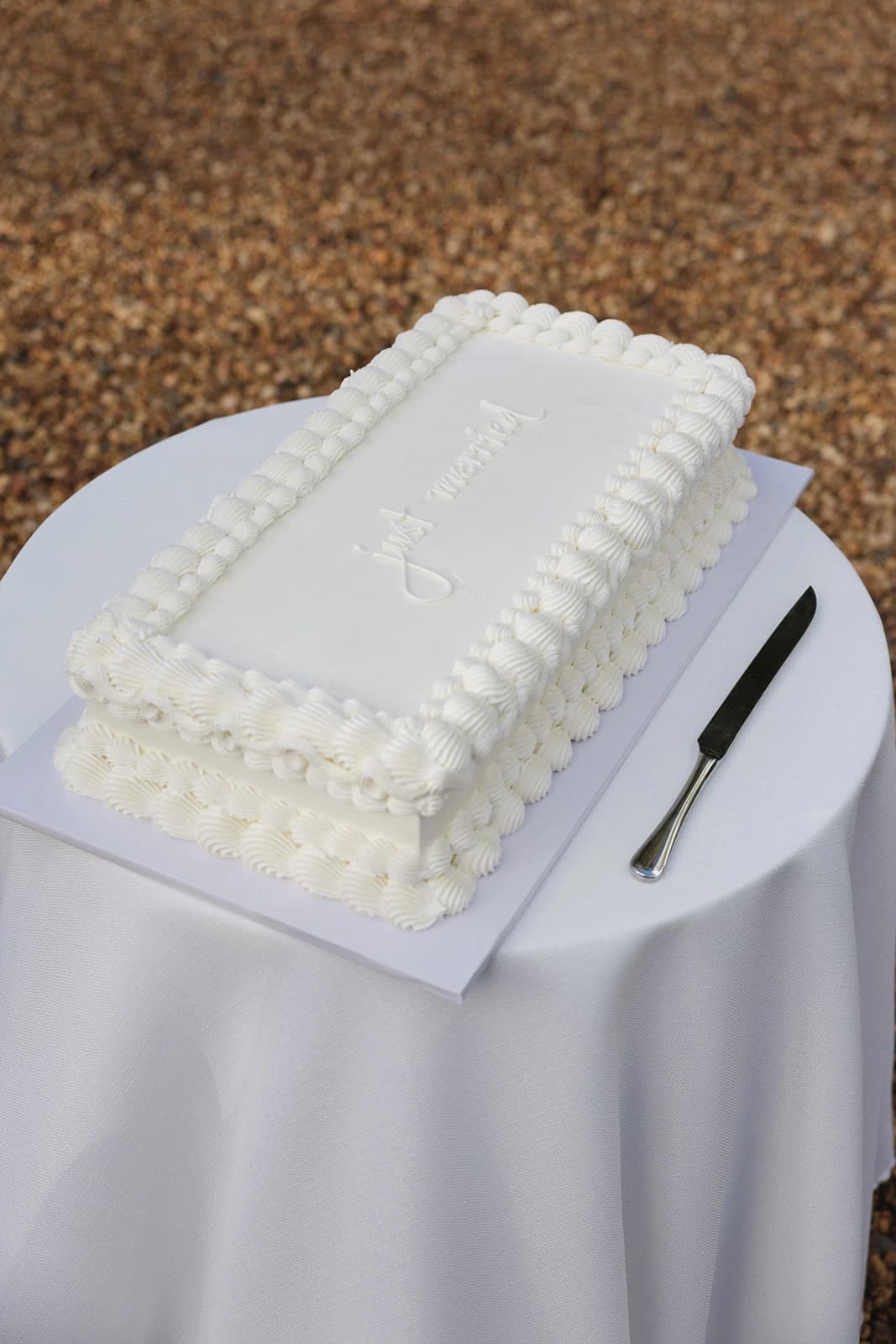
For those considering the format for a wedding or significant celebration, the decorative vocabulary is genuinely limitless. Berry compote, swirled into frosting in deep crimson ribbons, creates drama with almost no technical effort. Freeze-dried raspberries and strawberries offer vivid, shelf-stable colour that doesn't weep onto white buttercream. Edible flowers pressed gently into a slightly softened surface stay put without adhesive. Fresh seasonal fruit — glossy cherries, halved figs, clusters of redcurrants — brings an organic luxuriance that feels abundant rather than overwrought. The key, most bakers agree, is restraint in arrangement rather than restraint in ingredient. Fill the canvas. But fill it with intention.
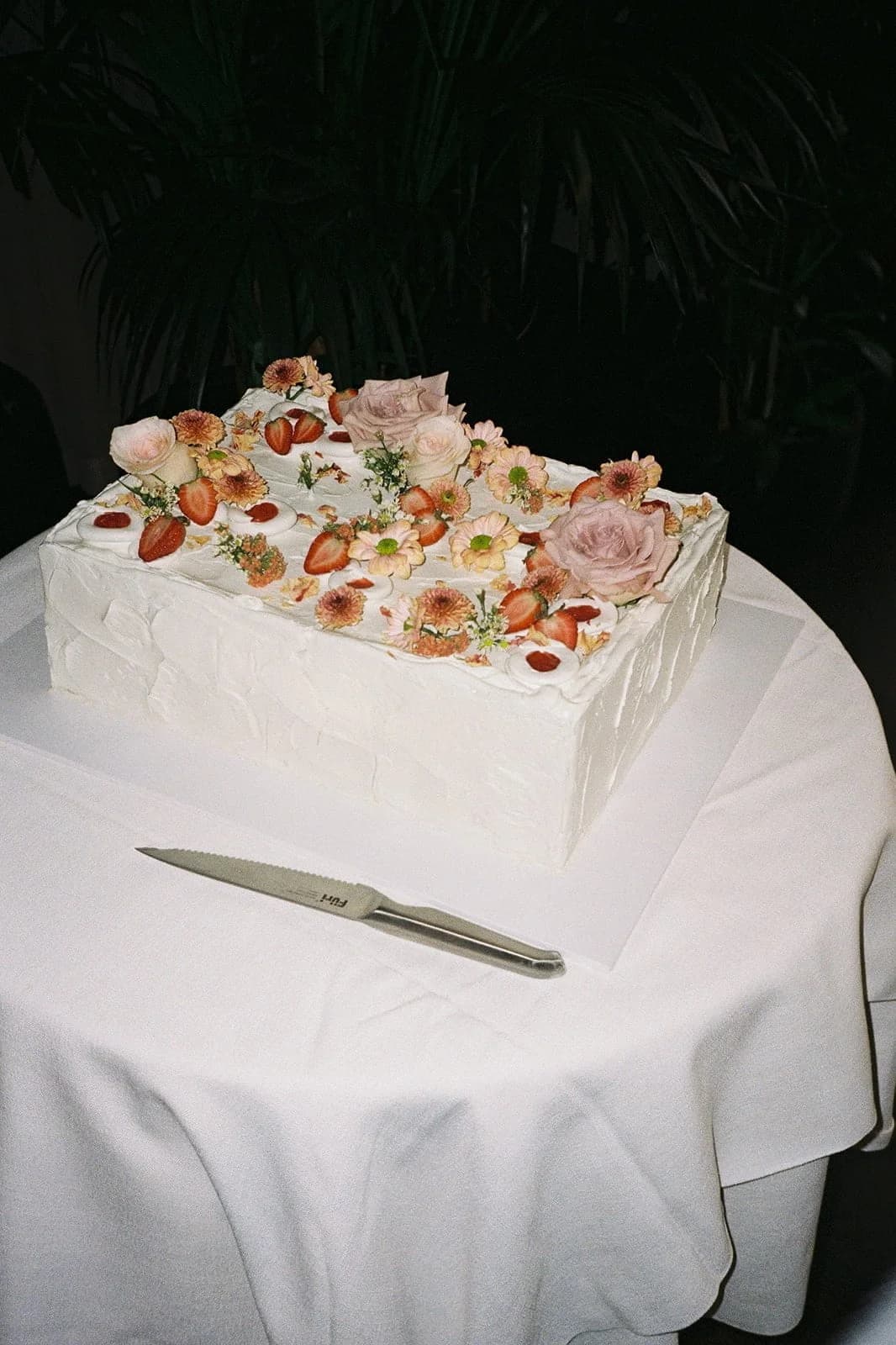
The slab cake's moment has arrived not despite its simplicity, but because of what that simplicity makes possible. It asks the baker one question — what will you do with all this space? — and then stands back. The answers, increasingly, are extraordinary.
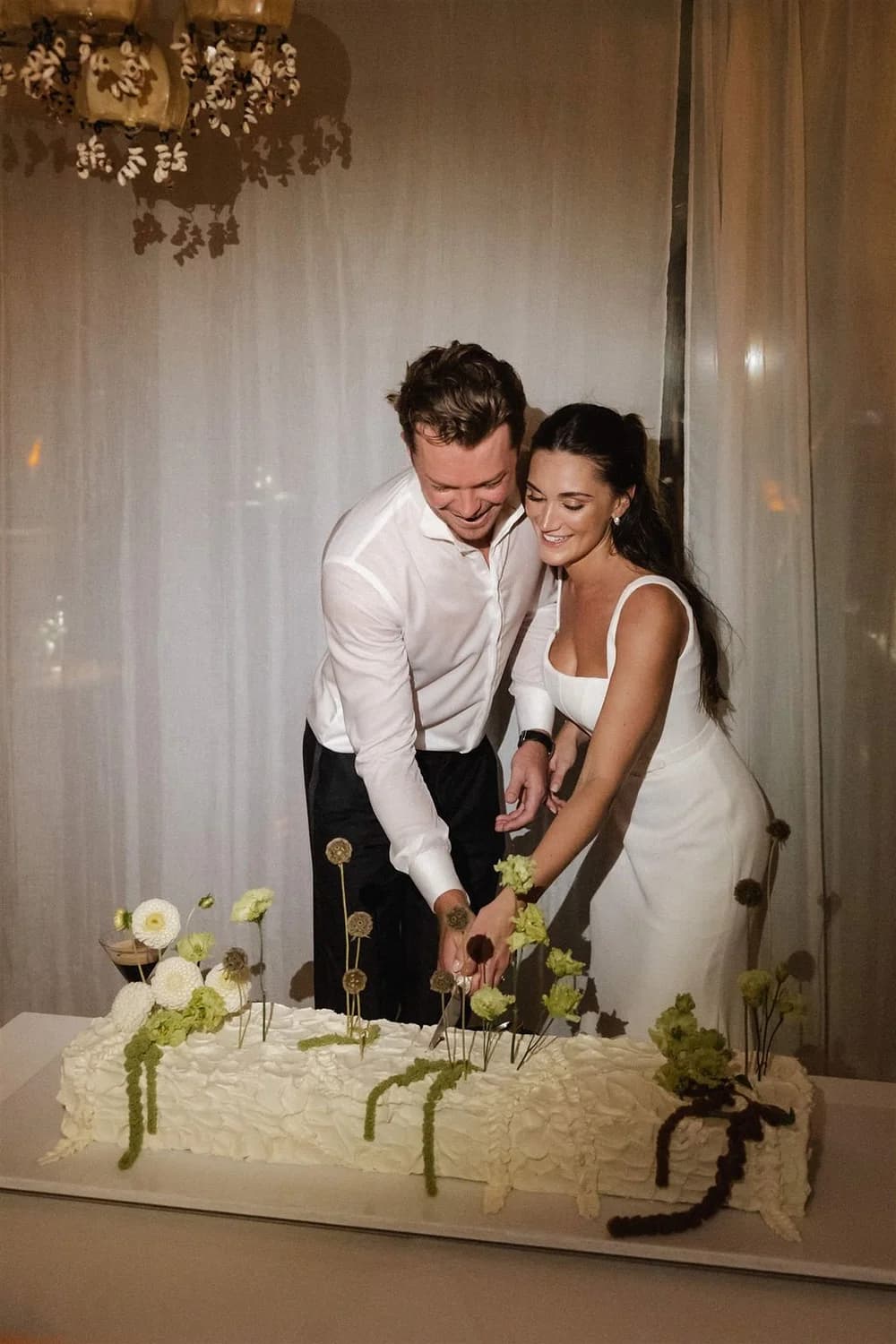
Image Sources
Image 1 - Carly Kelly
Image 2 - butter.au
Image 3 - labouroflove.my
Image 4 - roxannerosensteel
Image 5 - picnicbakedgoods
Image 6 - odri_bakery
Image 7 - frenchcake.ru
Image 8 - Carly Kelly
Image 9 - hellomay.com.au
Image 10 - moonvelvetstudio.com