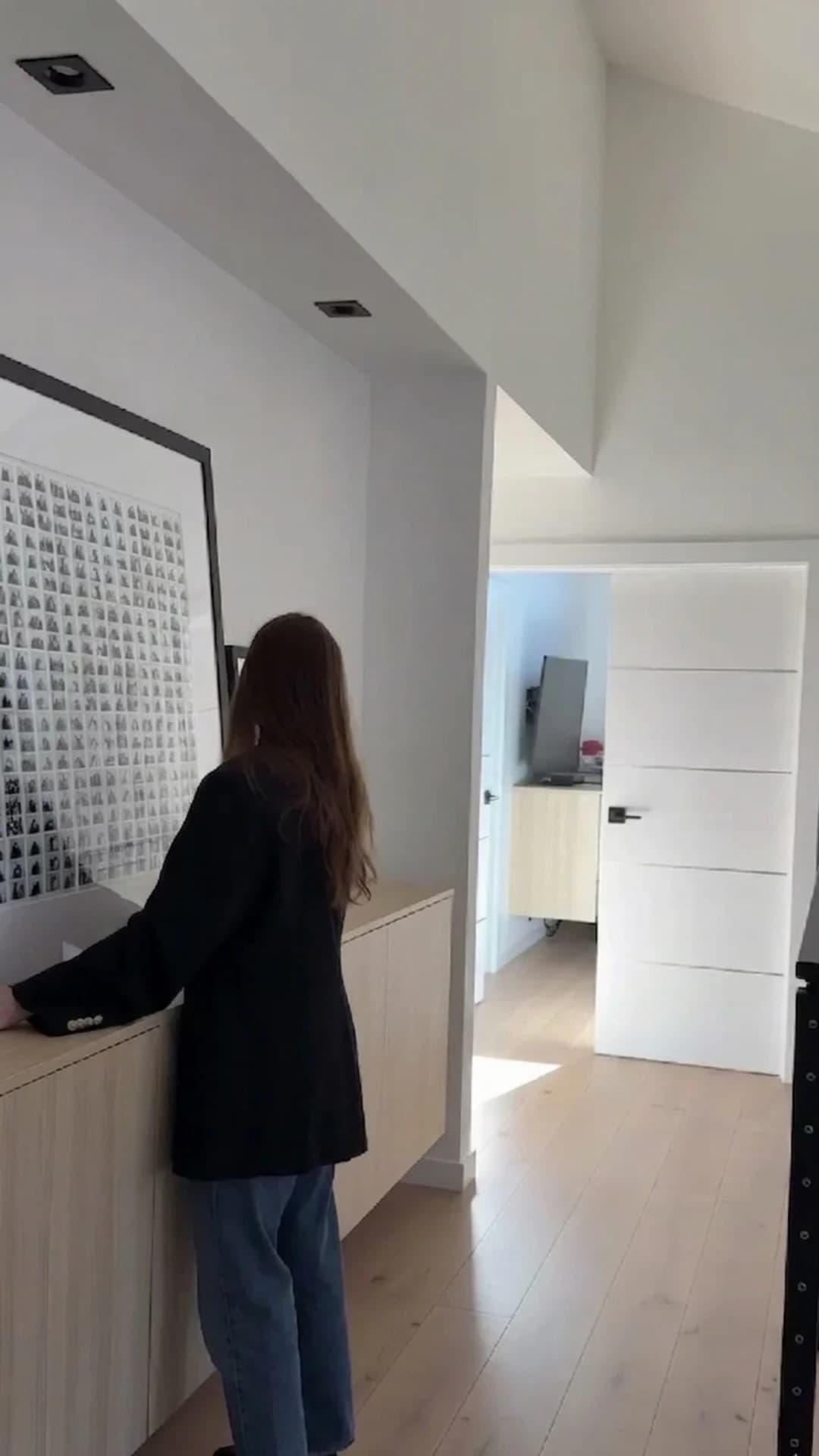
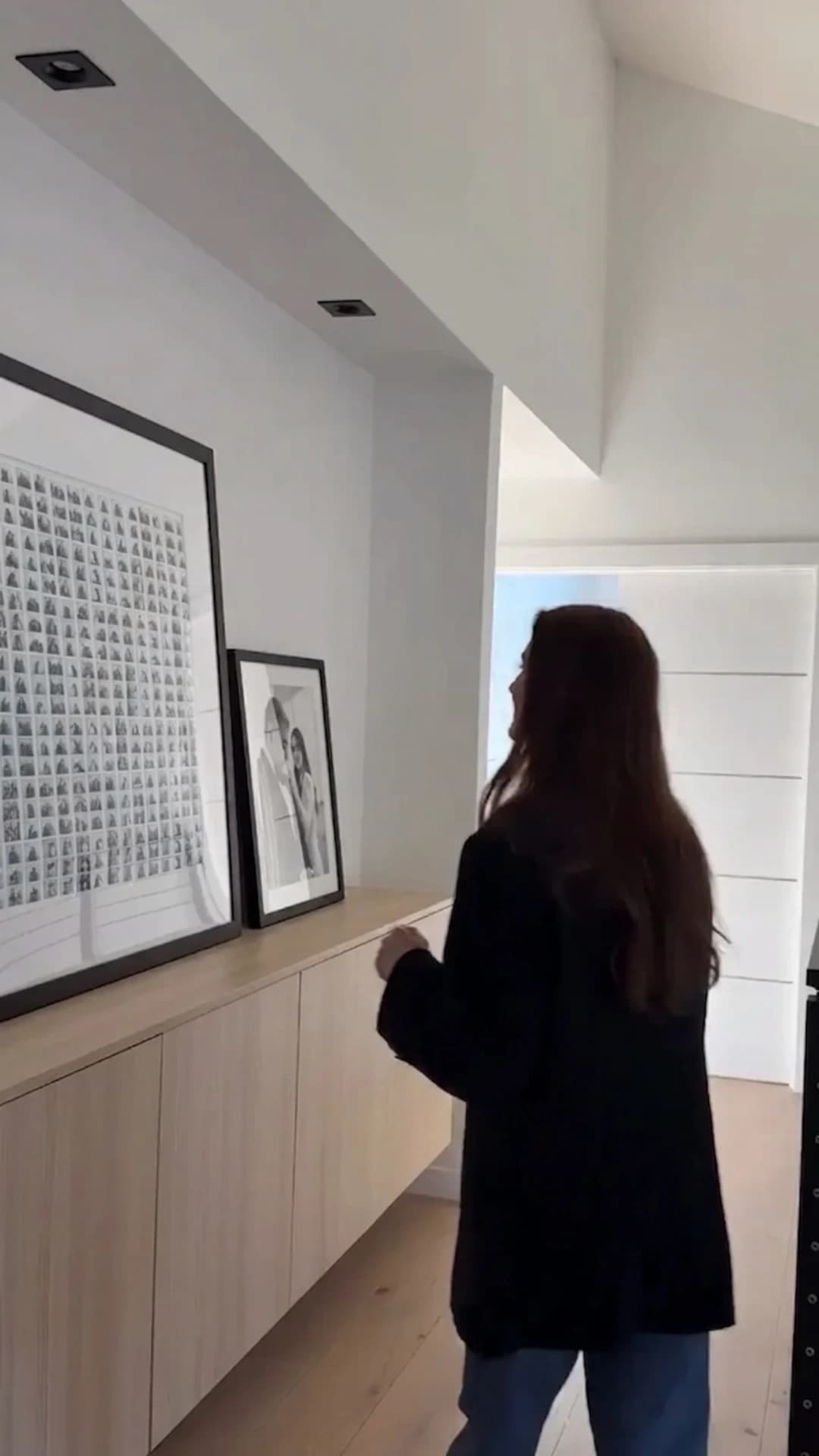
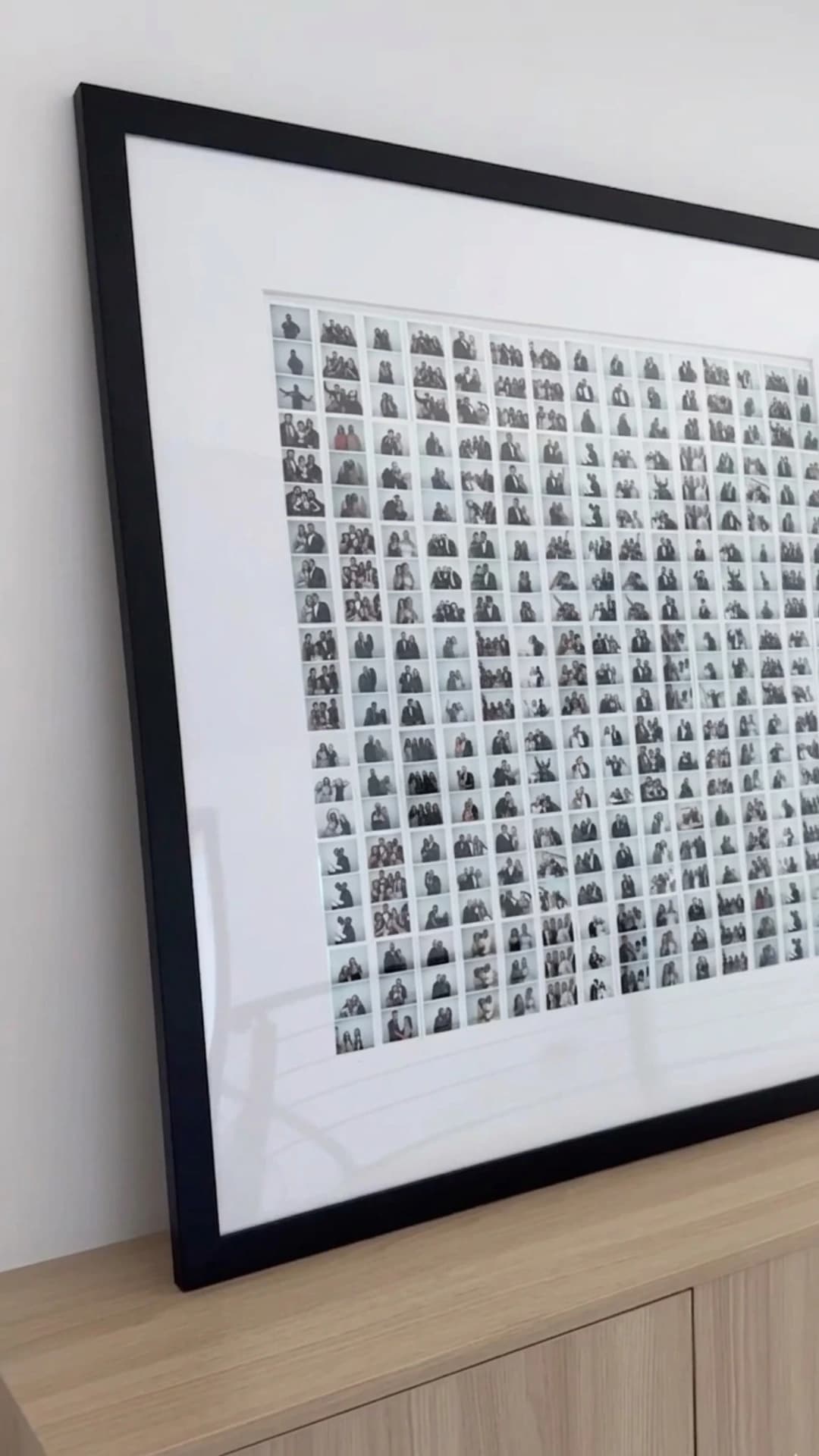
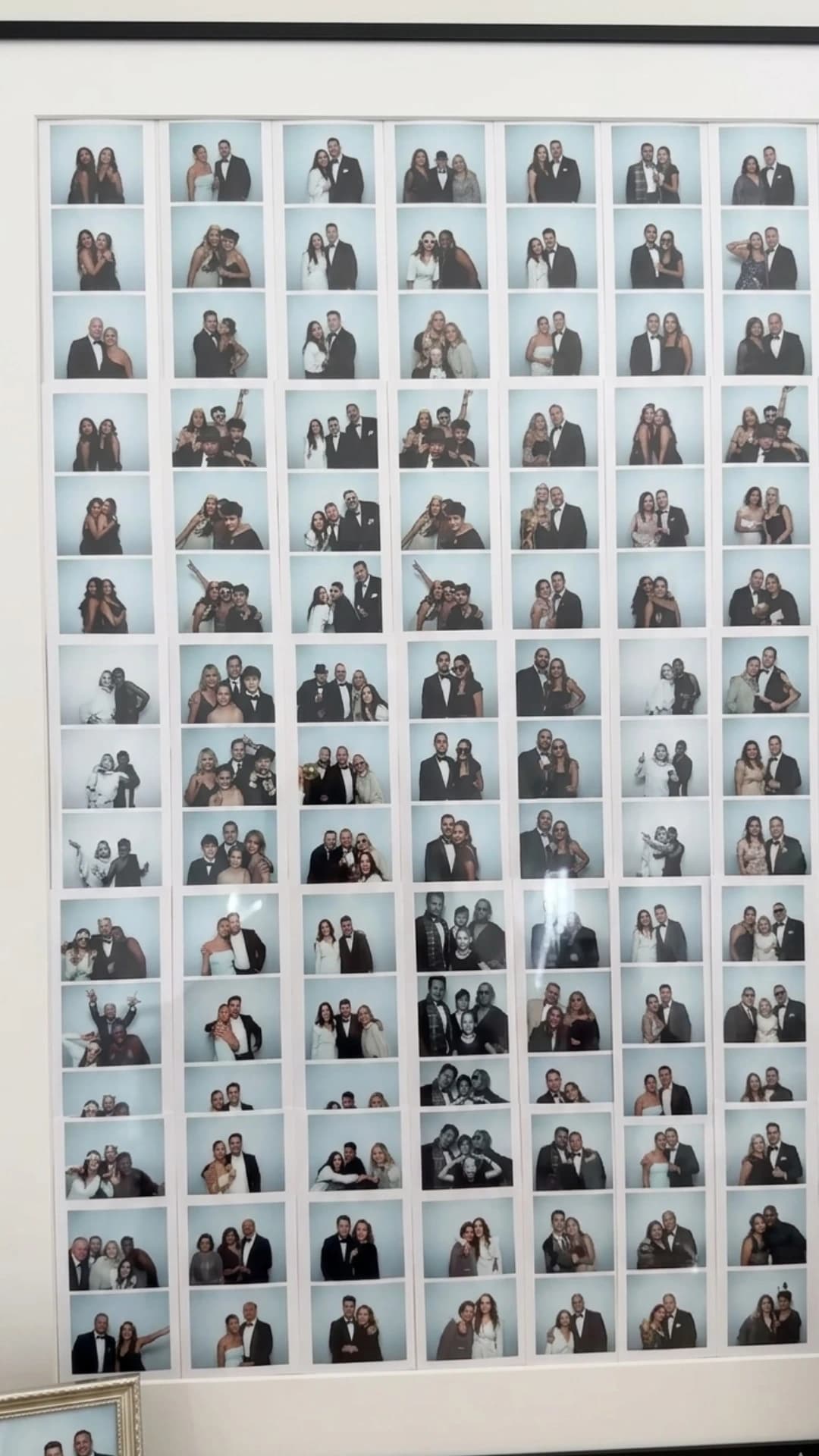
It makes a certain kind of sense. Wedding photography has evolved alongside the couples it serves — editorial, instinctive, alive. The best photographers today are chasing feeling over formality, and they capture it. But their lens is, by nature, on the couple, the ceremony, the moments worth preserving in full. The photo booth exists in an entirely different register. It belongs to the guests — two seconds, a flash, whatever happens. Individually, each strip is a little corny, a little chaotic, entirely disposable. But there’s a principle that artists from Warhol to Tara Donovan have long understood: accumulation transforms. What reads as mundane in isolation becomes something else entirely at scale. Arranged edge to edge, strip after strip, the whole evening compressed into a single frame — it stops being a party favour and becomes a portrait of everyone you love.
THE KEEPSAKE THAT WORKS AS ART
What makes the framed grid so visually compelling is its density. Dozens — sometimes hundreds — of individual strips, arranged in tight rows behind a single pane of glass, create something that reads as both documentary and decorative. From across the room, it’s graphic and arresting. Up close, it’s an entire evening in miniature: your grandmother in a feather boa, your college roommate mid-shimmy, your new husband laughing at something just off frame.
Unlike a traditional guest book, which tends to disappear into a drawer, or a wedding album, which lives on a shelf, this piece earns wall space. It’s scaled to hang, designed to be looked at, and personal in a way that no print or portrait quite replicates. Guests appear in it. Which means every time someone visits, they find themselves in it too.